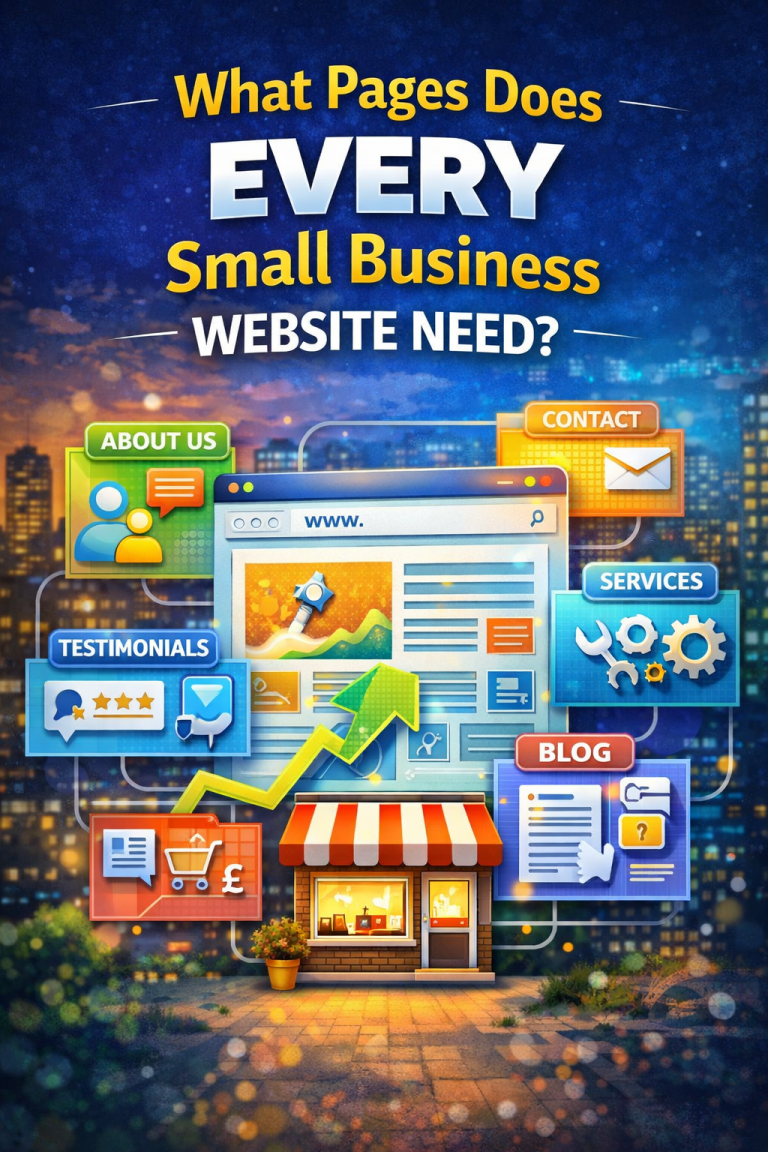

A small business website does not need dozens of pages to be effective, but it does need the right ones. The best websites are clear, easy to navigate, and designed to help visitors understand what you do and how to contact you.
If your website is missing key pages, potential customers may leave without taking the next step.
1. Homepage
Your homepage should explain who you are, what you do, who you help, and what action you want people to take. It should not try to say everything, but it should give a clear overview and guide people to the most important areas of the site.
A strong homepage usually includes:
- a clear headline
- a short explanation of your services
- trust signals such as testimonials or reviews
- links to key pages
- a strong call to action
2. About page
People often want to know who they are dealing with before they get in touch. An about page helps build trust by showing the people, values, and experience behind the business.
It does not need to be long, but it should feel real and credible.
3. Service pages
This is one of the most important parts of any small business website. Each core service should usually have its own page.
This helps visitors quickly understand what you offer, and it also gives search engines more clarity about your services.
A service page should explain:
- what the service is
- who it is for
- the benefits
- what is included
- how to get started
4. Contact page
Your contact page should make it easy for people to take the next step. Include a form, phone number, email address, and any other useful contact details.
If you serve a local area, you should also mention your location or service area clearly.
5. Testimonials or reviews
Social proof matters. Reviews and testimonials help reassure potential customers that other people have had a good experience working with you.
These can be included on a dedicated page, across the site, or both.
6. FAQs
A frequently asked questions page can be incredibly useful for both visitors and search visibility. It allows you to answer common concerns clearly, reduce friction, and support AEO.
FAQs can cover things like pricing, timelines, process, support, and what customers can expect.
7. Blog or advice section
A blog is not essential for every business, but it can be very valuable. Useful articles can help you target search terms, answer customer questions, and show expertise.
For service businesses, this can be a strong long-term asset.
8. Privacy policy and legal pages
Even small websites need the appropriate legal pages, especially if you collect enquiries or use analytics and cookies.
Optional pages that can add value
Depending on your business, you may also benefit from:
- case studies
- gallery or portfolio pages
- location pages
- booking pages
- team pages
- resources or downloads
Final thoughts
Every small business website should be built around clarity, trust, and action. If visitors can quickly understand what you offer, why they should trust you, and how to contact you, your website is doing its job.
The exact pages you need may vary, but the basics should always be covered properly.
FAQs
Do I need separate pages for each service?
In most cases, yes. Separate service pages make it easier for visitors to find relevant information and help search engines understand what your business offers.
Is a blog necessary for a small business website?
Not always, but it can be very useful for SEO, AEO, and answering customer questions.
What is the most important page on a website?
The homepage is important, but service pages and contact pages are often just as critical for generating enquiries.
Should I include testimonials on my website?
Yes. Testimonials help build trust and can make a real difference to conversion rates.